Featured
Table of Contents
Ranking for "near me" searches requires optimizing local listings, unbranded keywords, evaluations, and visual content across search, maps, social, and AI platforms to capture high-intent regional traffic. "Near me" searches have transformed how customers find local businesses. According to the, 83% of customers still utilize search engines like Google or Bing to find regional businessesbut 73% likewise find them on social networks, and nearly 20% now turn to AI assistants such as ChatGPT or Gemini.
Over the past years, searches consisting of "near me" have actually exploded. Searches like "restaurants near me", "jobs near me", and "stores near me" continue to control.
The graph below illustrates the "near me" search term in the United States over the past 9 years. Smart devices remain the top driver of "near me" searches, but AI is quickly signing up with the mix. Nearly one in five consumers now use AI tools to discover recommendations, with Gen Z leading the trend.
Consistency across these channels is what wins the click (and the visit). Leading Related "Near Me" Queries Google ranks local results based upon 3 main factors: Relevance: How well your listing matches what users are searching for Proximity: Range from the searcher's current location Prominence: How widely known and well-reviewed your business is throughout the web The 2025 CBI found that precision, convenience, and customer feedback are now the leading three aspects influencing where customers select to check out.
Traditional SEO Vs GEO Tactics for 2026
Your Google Organization Profile (GBP) is your digital storefront. Services that rank in Google's local 3-pack make 126% more traffic and 93% more actions than those ranked below. To optimize your GBP: Keep your Name, Address, and Phone constant. Update hours, especially around holidays or events. Add photos, videos, and attributes (e.g., availability, features).
Enable features like mobile buying, bookings, or scheduling to transform searchers instantly. For multi-location brands, regional landing pages are important for building importance. Each page ought to consist of: City-specific keywords (e.g., "emergency situation oral care in Austin") SEO-friendly URLs and meta descriptions Consumer reviews and user-generated content Clear calls-to-action and mobile-first design highlights enhancing for unbranded keywords to catch the 63% of regional searches that don't consist of brand.
To develop proof that drives trust: Encourage satisfied consumers to leave reviews.
Will Your Local Strategy Ready for 2026
Include fresh, high-quality pictures and videos regularly. As describes, companies that consistently update photo material see stronger performance in regional resultsand higher conversion rates. Generative AI has changed how people search. Your material now needs to perform in both conventional search and AI-driven recommendations. Here's how: Compose in natural, conversational language that answers real concerns.
Usage schema markup for structured information like openingHours and priceRange. 3.6 platforms before deciding where to go. That makes regional visibility across social, search, and AI platforms critical.
Engage straight with customers through comments and evaluations. Tools like SOCi's Genius Search and Genius Evaluations utilize real-time data to assist multi-location brand names: Enhance listings for accuracy and efficiency Improve reaction times to reviews Identify location-specific visibility gaps By automating insight collection and regional updates, you can stay ahead of rivals and adapt faster to shifts in customer habits.
Consumers move fluidly between Google, social, maps, and AI assistantsoften in the same session. Ranking for "near me" searches now implies showing up all over they look. Start with accurate listings, construct in your area pertinent content, and embrace unbranded search. Then, utilize AI insights to tweak your existence constantly. Since in 2025, presence isn't just about being foundit's about being picked.
Conversational SEO Tips for Local Businesses
Did you understand local and natural searches represent 69% of digital traffic? Those searchers often contain the "near me" tag as searchers look for options nearby. In this article I will describe what "near me" searches are and how you rank for them. Regional searches are the greatest motorist of traffic.
This SEO subset is unique, as it equates digital research study into physical foot traffic or direct calls to service companies. Any local business needs to consist of local SEO "near me" as a pillar of their material technique. When companies optimize for this, they can anticipate a considerable return on their investment.
Taking advantage of this search pattern needs a variety of optimization techniques. When executed efficiently, local business can improve their visibility in search rankings to get attention and clicks from audiences in their yard. What You Need to Know About "Near Me" Searches "Near me" SEO enables companies to get in front of individuals at the choice phase of the customer journey.
Usually, you'll gain from regional SEO "near me" optimization if you own any type of organization with a brick-and-mortar location that clients will check out. A few examples include retail, dining establishments, home entertainment, hotels, spas, and field service companies like heating and cooling, plumbers, or electrical contractors. These organizations all target market that are close by.
Beyond the Map Load: Holistic Resident Search StrategyThe Importance of Accurate Data in Local Search
They are typically really particular, representing a micro-moment for purchasers needing your item or service. To rank for the words "near me" in your content, you'll target particular areas with everything from city-specific search terms to distinct business information for each location. Practically any regional company can use these methods: Home Providers: Remodelers, plumbers, electrical experts, landscapers, and more Automotive: Mechanics, vehicle body stores, car dealers, and rental services.
Financial Solutions: Organizations such as monetary advisory companies and banks. Retail Stores: Nearly any kind of retail place, consisting of grocery shops, electronic devices outlets, and clothes stores. Food and Drink: Diners, restaurants, bars, and breweries. Healthcare and Dental Workplaces: Whatever from physicians and oral workplaces to healthcare facilities and immediate care.
Beyond the Map Load: Holistic Resident Search StrategyPertinent local keywords can likewise assist your Business Profile rank much better. Range: This component thinks about how far the search result is from the place term in the inquiry.
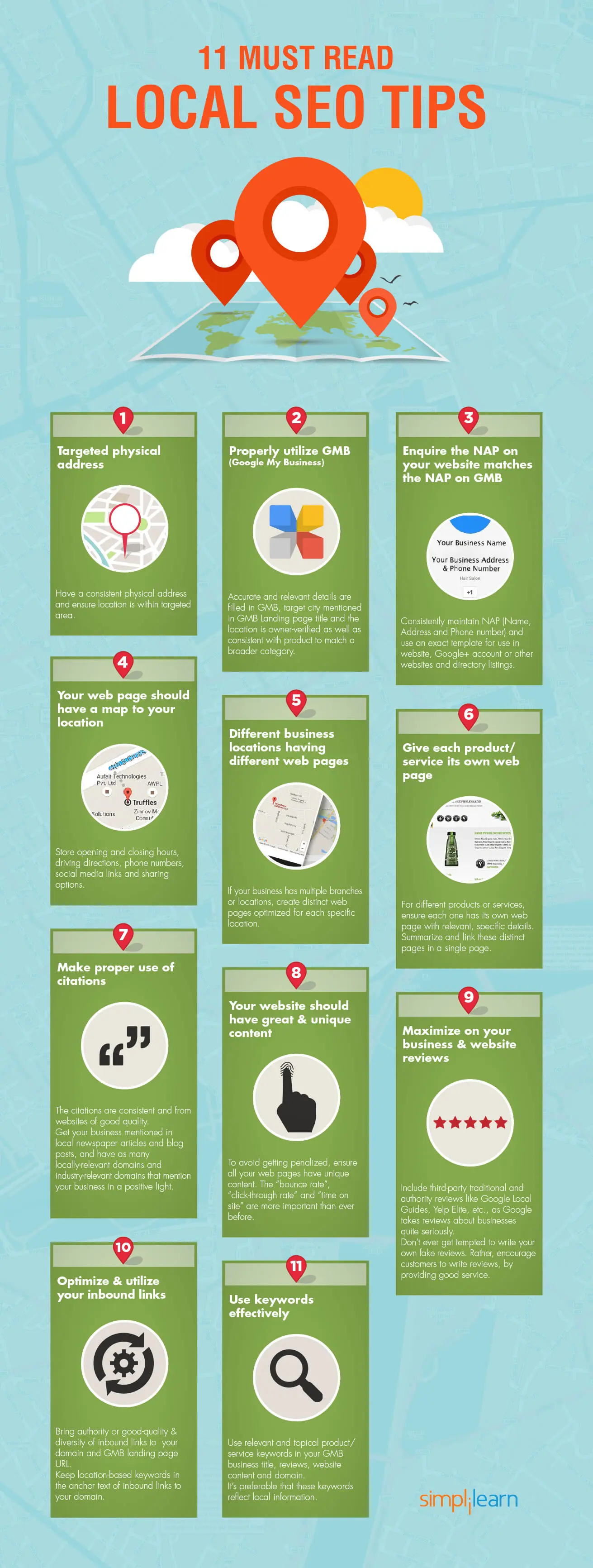
Prominence: This refers to how popular a company is in the offline world. Google likewise uses information about an organization in the digital landscape, from web links to posts to directories. Google will likewise figure in things like review counts and scores. Make certain to include your business's name, address, and phone number (NAP) all over the internet to remain popular, and encourage social networks shares among your audience.

Latest Posts
Maximizing Proximity Factors for Near Me Performance
Leveraging AEO to Boost Local Visibility
Conversational SEO Tips for Small Businesses